

Quick answer: Why visit Egypt?
Because Egypt layers a deep archaeological record with living cities, dramatic landscapes and flavoursome food. The Pyramids are an obvious draw, but the country rewards discovery away from the photo-op: sail the Nile between Luxor and Aswan, dive the Red Sea, walk Ottoman-era Cairo lanes and taste regional foods in local markets. Together these elements make Egypt one of the most varied cultural journeys in the eastern Mediterranean.
Ancient history and archaeology
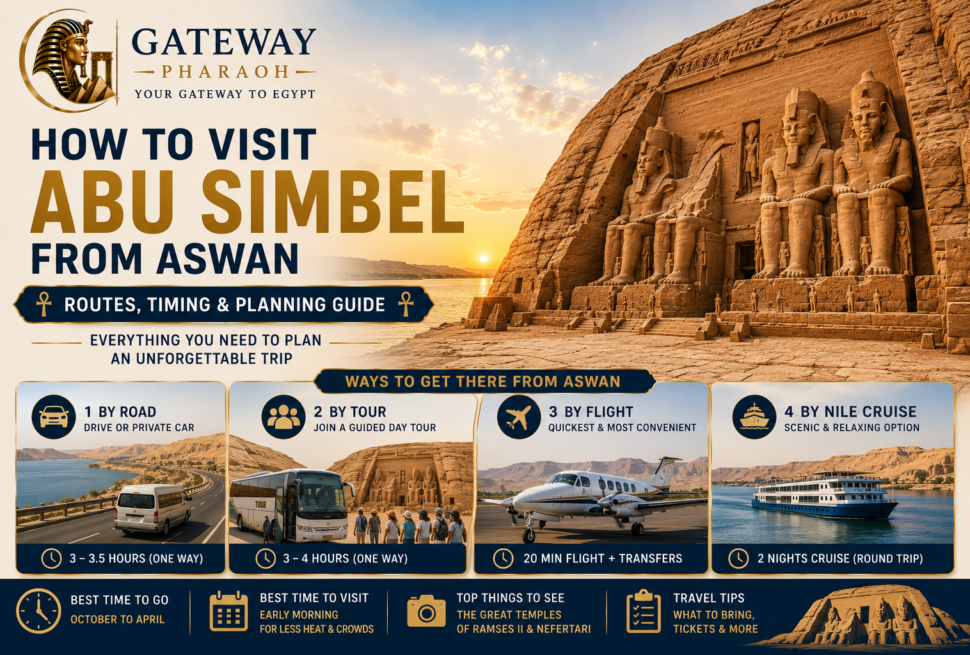
Egypt tourism attractions are anchored by four millennia of recorded history. The major sites—Giza, Luxor (Thebes), the Valley of the Kings, Abu Simbel and Alexandria—present a concentrated experience of ancient religion, pharaonic tomb art and classical-era ruins. Visiting these sites helps you see how ancient engineering, written records and monumental art shaped later Mediterranean and Near Eastern cultures.
Landscapes: Nile, desert and Red Sea
Egypt is more than sand and monuments. The Nile Valley is a green corridor cutting through desert: small villages, riverine agriculture and palm-lined feluccas (traditional sailboats) give a different pace from road travel. The Sinai and Western Desert offer stark, high-contrast landscapes—good for hiking or jeep safaris—while the Red Sea coast (Hurghada, Marsa Alam, Sharm el-Sheikh) contains world-class coral reefs and warm-water diving.
Food, markets and daily life
Egyptian food blends Levantine and North African influences. Street food like koshari, ful medames, falafel and fresh flatbreads are everywhere. Markets (bazaars) are sensory—spice vendors, tea shops and artisans. Sampling local cafés and markets is one of the best ways to connect with everyday culture.
Cultural experiences beyond monuments
- Attend a mosque service or a Coptic mass (respectful observation) to see living religious traditions.
- Take a felucca on the Nile at sunset for an unhurried view of riverside life.
- Spend time in Alexandria exploring its Mediterranean architecture, libraries and seafood cafés.
- Join a cooking class or market walk to learn about Egyptian ingredients and techniques.
Practicalities: safety, visas, costs and timing
Safety and entry rules change; always check official sources before travel. The U.S. Department of State and your embassy publish current travel advisories and entry guidance (see References). Local tourism authorities and Experience Egypt keep up-to-date practical info about sites and visitor services.
Cost: distinguish tourist short-trip spending from resident monthly living costs. Resident living costs (housing, utilities, groceries) are tracked by crowd-sourced indices—indicative figures from Numbeo and Expatistan (accessed August 2026) can give a sense of relative cost but are not official. Tourist spending varies widely by style and season; as an illustrative example only, day-to-day traveler budgets might range from ‘budget’ to ‘comfort’ to ‘luxury’ depending on accommodation, private guides and internal flights. These figures are indicative (Aug 2026) and will vary by city, neighborhood and exchange rate—treat them as planning guides only.
When to go: many visitors prefer October–April for milder daytime temperatures in Nile and desert regions; coastal Red Sea areas are pleasant even in warmer months. Peak seasons (winter holidays, spring) mean more crowds at major sites.
Quick comparison: experiences to choose
| Experience | Why go | Good for |
|---|---|---|
| Giza & Cairo | Iconic monuments, museums, lively urban fabric | First-time visitors, cultural museums, night photography |
| Nile cruise (Luxor–Aswan) | Concentrated temple visits, relaxed river travel | History lovers, slower travel pace, scenic mornings |
| Red Sea coast | Diving, snorkeling, beach relaxation | Divers, families, sun seekers |
| Alexandria & Mediterranean | Classical antiquity, library history, seafood culture | Historians, coastal city explorers |
Practical examples & suggested itineraries
Two example Gateway Pharaoh itineraries that illustrate different balances of history and relaxation:
- 7-day Cairo–Luxor–Aswan–Alexandria (luxury) — concentrated archaeology, museums and a taste of coastal Alexandria.
- 10-day Cairo–Luxor–Hurghada — pairs classic sites with Red Sea diving or beach time.
Example daily rhythm for a 7–10 day trip: morning temple visit, midday rest or museum, late afternoon market walk or felucca ride, evening meal in a local restaurant. Build in travel days between Cairo, Luxor and coastal resorts and allow at least two full days for Luxor/Valley of the Kings to appreciate the sites without rush.
FAQ
- Is Egypt safe to visit?
- Safety varies by region and time. Check your government travel advisory and the local embassy before booking; see the U.S. Department of State and Egypt Embassy links in References for current guidance.
- What’s the best time of year to visit?
- Many travellers prefer October–April for milder temperatures in the Nile and desert zones; coastal Red Sea areas are warm for longer. Avoid assuming weather is the same across the country—conditions differ between Cairo, Sinai and Hurghada.
- How much should I budget?
- Budgets vary by travel style. Use crowd-sourced cost indices (Numbeo, Expatistan) for resident living-cost context (indicative, Aug 2026). For tourist budgets, factor in flights, entrance fees, guides, internal transport and accommodation; Gateway Pharaoh itineraries show different price points.
- Do I need a guide?
- A guide is not mandatory but is highly recommended at major archaeological sites to explain context and to help with practicalities like ticketing and Egyptian site protocols.
- Can I combine diving and archaeology in one trip?
- Yes. A common combination is Cairo/Luxor for history plus a few days on the Red Sea (Hurghada or Sharm) for diving—see the 10-day Gateway Pharaoh itinerary for an example.
References
- Experience Egypt — Useful Information (official tourism guidance and practical tips)
- Visit Egypt (official national tourism site)
- U.S. Department of State — Egypt Travel Advisory
- Egypt Embassy — Travel Information
- Numbeo — Egypt cost of living (indicative crowd-sourced data) (accessed Aug 2026)
Planning to see the layers of Egypt beyond the pyramids? If you’re ready to build a trip that fits your interests—history, relaxation, diving or culinary discovery—start with an itinerary that balances site time and downtime. Explore our 7-day luxury classic or the 10-day Cairo–Luxor–Hurghada option to see how experiences can be combined, then contact a travel specialist to tailor dates and pace.
Note: Practical details such as entry requirements, opening hours, costs and safety recommendations change. Use the official links above and your embassy resources to confirm rules before booking. The cost references are crowd-sourced and indicative; they are dated in the References where noted.