

Quick answer
Yes — you can see Egypt’s highlights in 10 days without constant rushing if you plan a compact route: 3 days in Cairo (Pyramids, Egyptian Museum, Islamic/Coptic quarters), 3–4 days in Upper Egypt (Luxor’s East and West Banks and a short Nile cruise or private transfers), and 2–3 days on the Red Sea (Hurghada or a Dahab-style alternative) to rest and dive/snorkel. The plan below is paced so you see major sites while allowing rest and transit days.
Why 10 days works
Ten days gives two full windows: the Nile/Pharaonic heartland (Cairo to Luxor/Aswan) and Red Sea relaxation. It’s long enough to visit the Giza plateau, the Egyptian Museum (or Grand Egyptian Museum when applicable), Luxor temples and the Valley of the Kings, and still finish with beach time. The balance is between seeing iconic sites and avoiding travel fatigue—so use 1–2 internal flights or comfortable overnight trains/cruises and pre-book transfers.
Practical 10-day itinerary (day-by-day)
Below is a realistic, paced itinerary. Swap days for flight schedules, and note that opening hours, internal flights and local transport vary seasonally.
- Day 1 — Arrival in Cairo: Arrive, settle into a centrally located hotel (Giza or Downtown), short evening walk in Khan el-Khalili or along the Nile corniche.
- Day 2 — Giza & Saqqara: Morning at Giza Pyramids and Sphinx; afternoon visit to Saqqara/Djoser Step Pyramid. Rest in the evening.
- Day 3 — Cairo museums & Jewish/Coptic quarters: Egyptian Museum or Grand Egyptian Museum (check current exhibit locations), then Coptic Cairo and/or Islamic Cairo depending on preference.
- Day 4 — Travel to Luxor: Early flight or daytime train to Luxor. Afternoon: Luxor Temple & Karnak by sunset-light. Overnight in Luxor.
- Day 5 — West Bank (Valley of the Kings): Valley of the Kings, Hatshepsut’s temple, and the Colossi of Memnon. Relax in the evening or take a felucca on the Nile.
- Day 6 — Optional Nile cruise or transfer to Aswan: Short 2–3 night Nile cruise (if added) or travel to Aswan; visit Philae and High Dam if time allows.
- Day 7 — Aswan / return to Cairo: If in Aswan, explore local markets and Nubian sights; evening flight back to Cairo or overnight train depending on bookings.
- Day 8 — Transfer to the Red Sea: Fly or drive to Hurghada (or fly to Sharm/transfer to Dahab for different vibe). Check into a beach resort and unwind.
- Day 9 — Red Sea activities: Snorkel/diving trip, boat day or simply relax at the beach.
- Day 10 — Return to Cairo / departure: Transfer back to Cairo for onward flight home. Allow extra buffer time for international connections.
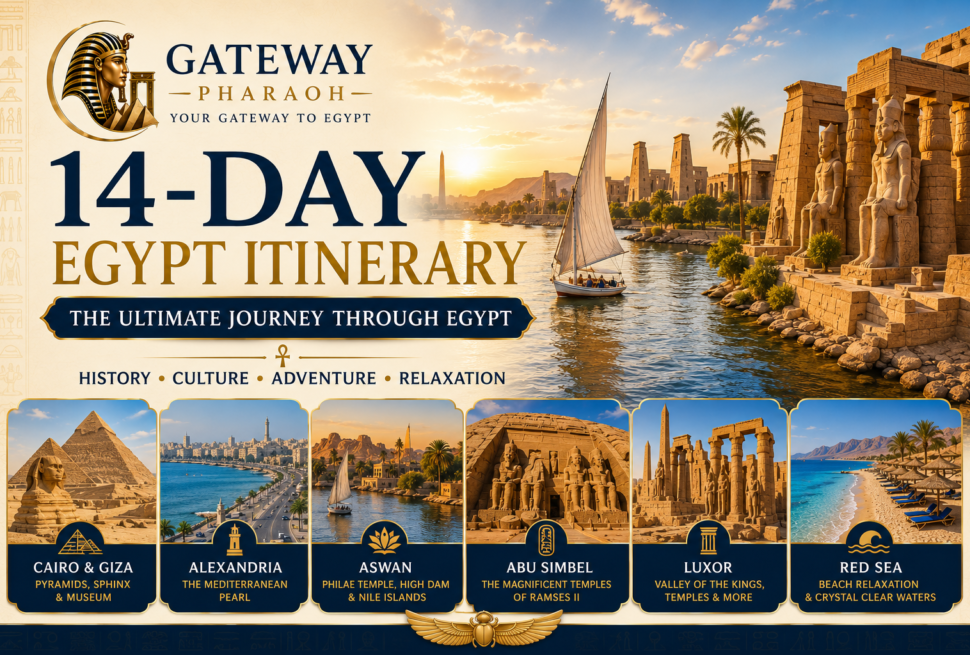
Practical example: follow Gateway Pharaoh’s Cairo–Luxor–Hurghada route for a combined historical-plus-beach plan: 10-Day Egypt Tour: Cairo, Luxor, Hurghada. If you prefer a focused cultural route, see the 10-Day Classical Egypt Tour.
Two common travel-style choices (comparison)
| Style | Highlights | Pace | Best for |
|---|---|---|---|
| Classical Cairo–Luxor–Aswan (inland focus) | Pyramids, museums, temples, Valley of the Kings | Moderate—museum and site-heavy | History and archaeology enthusiasts |
| Cairo–Luxor–Red Sea (mixed history + beach) | Same historic highlights + Red Sea relaxation/diving | Paced—sightseeing balanced with downtime | First-time visitors who want a beach finish |
Money and budgeting — tourist spending vs resident monthly costs
Tourist daily spending and resident monthly expenses differ substantially. As guidance (indicative figures):
- Tourist budgets (indicative, August 2026): backpacker ~USD 40–80/day, mid-range ~USD 80–200/day, luxury 200+ (depends on hotels, private guides, domestic flights and season). These are examples—not official prices.
- Resident monthly living costs (indicative ranges from crowd-sourced databases Aug 2026): basic local living in smaller cities can be USD 300–600/month; more Westernized lifestyles in Cairo may be USD 700–1,500/month. These reflect long-term rent, groceries, utilities and vary widely by neighborhood and lifestyle.
Sources such as Numbeo and Expatistan collect user inputs—use them for ballpark planning and expect real travel costs to change with exchange rates and season. See their pages for up-to-date breakdowns: Numbeo and Expatistan (links in References).
Practical planning tips
- Book one internal flight: To save time, a Cairo–Luxor or Aswan flight for the inbound leg and a return from Hurghada or Cairo is often worth the cost vs overnight trains.
- Pre-book guided visits: For sites like the Valley of the Kings and the Giza plateau, hiring a licensed guide or joining a small group avoids wasted time and helps navigate permits and opening windows.
- Rest days matter: Schedule lighter days after intense site visits—the sun, dust and walking can be draining.
- Health & safety checks: Consult official sources such as the U.S. Department of State travel advisory and your embassy pages before departure, and register travel details if advised.
- Local-season awareness: Summers are very hot—plan strenuous outdoor visits for mornings or evenings.
Frequently asked questions
Can you do Cairo and Luxor in 10 days?
Yes—Cairo (3 days) + Luxor and nearby sites (3–4 days) fits comfortably if you use an internal flight or an efficient overnight train. Add Red Sea days if you want rest-time at the end.
Is 10 days enough for a Nile cruise?
Short Nile cruises (2–4 nights) are common and can be integrated into a 10-day schedule, but a full experience sometimes requires 7 nights. Decide whether you prefer more time on the Nile or a Red Sea stopover.
How much walking should I expect?
Historic sites involve uneven ground and walking across large open areas. Wear comfortable shoes, bring water and plan for shade and rest breaks.
Are internal flights safe and reliable?
Internal carriers operate regularly, but schedules and availability vary—book in advance. For official safety guidance, consult your government travel advisory and the Egyptian embassy information (links below).
Do I need a local guide?
Not strictly, but a licensed guide enriches the experience, speeds up navigation of sites and can help with local logistics and bargaining in markets.
How should I divide time between history and relaxation?
For a balanced trip, allocate about 60–70% of your days to historical sightseeing and 30–40% to rest/Red Sea activities—adjust depending on your tolerance for museum and site-heavy days.
Ready to plan? If you want a ready-made route that follows the paced plan above, review Gateway Pharaoh’s options: the mixed history+beach Cairo–Luxor–Hurghada 10-day tour or the focused cultural 10-Day Classical Egypt Tour. Contact a tour operator to customize pace, internal flights and accommodation.
References
- Experience Egypt — official tourism resources and site information.
- Experience Egypt — Useful information — practical visitor guidance.
- Visit Egypt — visitor information and events.
- U.S. Department of State — Egypt travel advisory — for safety and travel advice.
- Egypt Embassy — travel information — embassy guidance and consular information.
- Numbeo — Egypt cost of living and Expatistan — Egypt cost of living — crowd-sourced cost comparisons (indicative).
Note: Cost ranges and schedules given above are indicative (August 2026). City, neighborhood, travel season, exchange rates and personal choices will change final prices. For official visa and safety requirements consult your embassy and government travel advisories before booking.