
A 13-day cultural itinerary across Cairo, Alexandria, Luxor and Aswan with a 7-night Nile cruise, key archaeological sites and major museums included.
This Egypt culture tour is organized around the destinations and travel services confirmed in the itinerary, so you can compare the route, inclusions and practical arrangements before making an enquiry.
Travelers comparing a Egypt culture tour can use the day-by-day plan below to understand the pace and sequence before requesting current availability.
The route details make this Egypt culture tour useful for comparing destinations, included services and the time allocated to each part of the program.
Egypt culture tour: Overview
Explore Egypt’s major archaeological and cultural sites
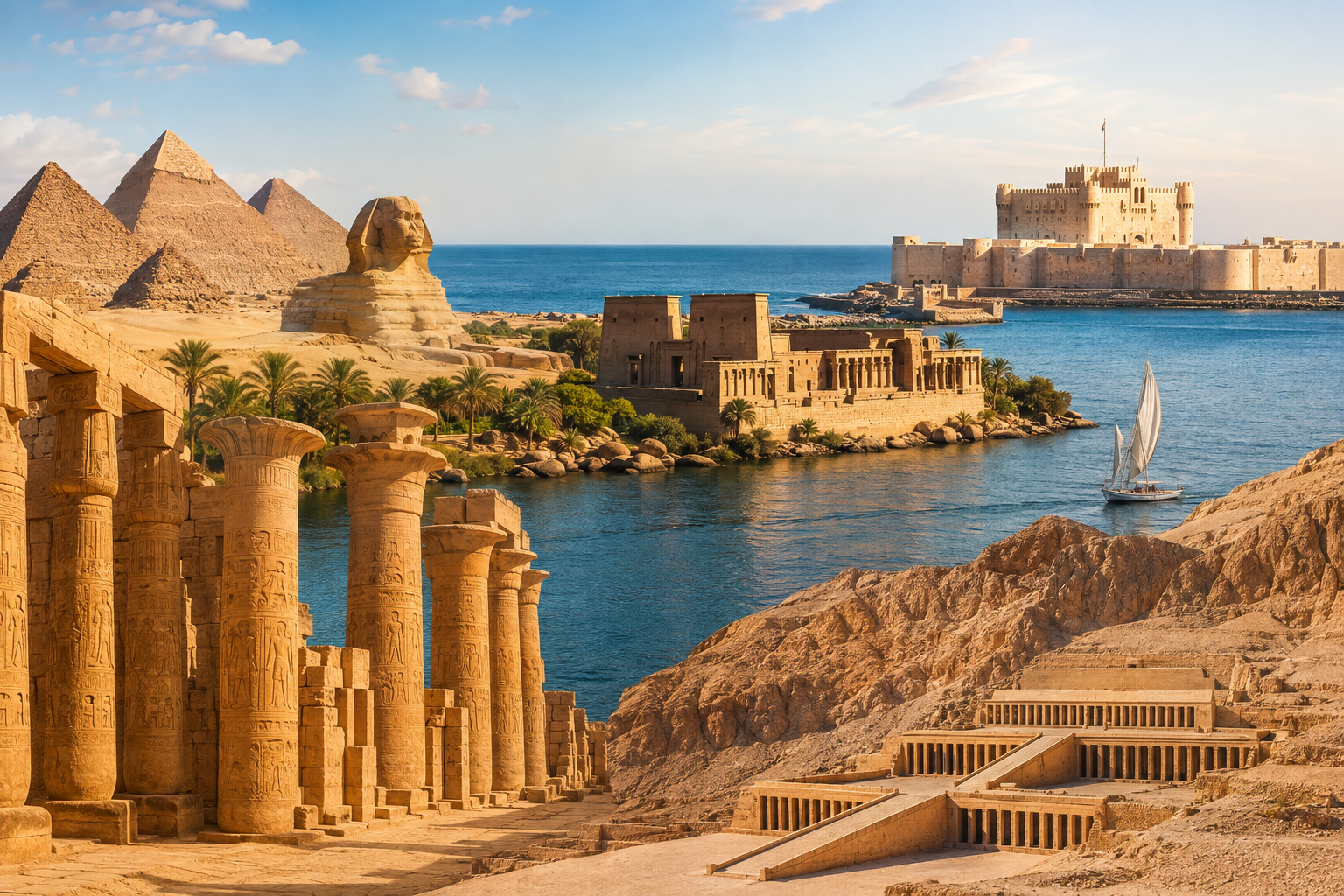
This thirteen-day itinerary brings together many of Egypt’s most celebrated monuments, museums and urban quarters across Cairo, Alexandria, Luxor and Aswan.
Over nearly two weeks you move between the Nile’s east and west banks, visit coastal Alexandria and travel along the river corridor where temples and tombs punctuate the landscape.
Beginnings in Cairo and the Giza Plateau
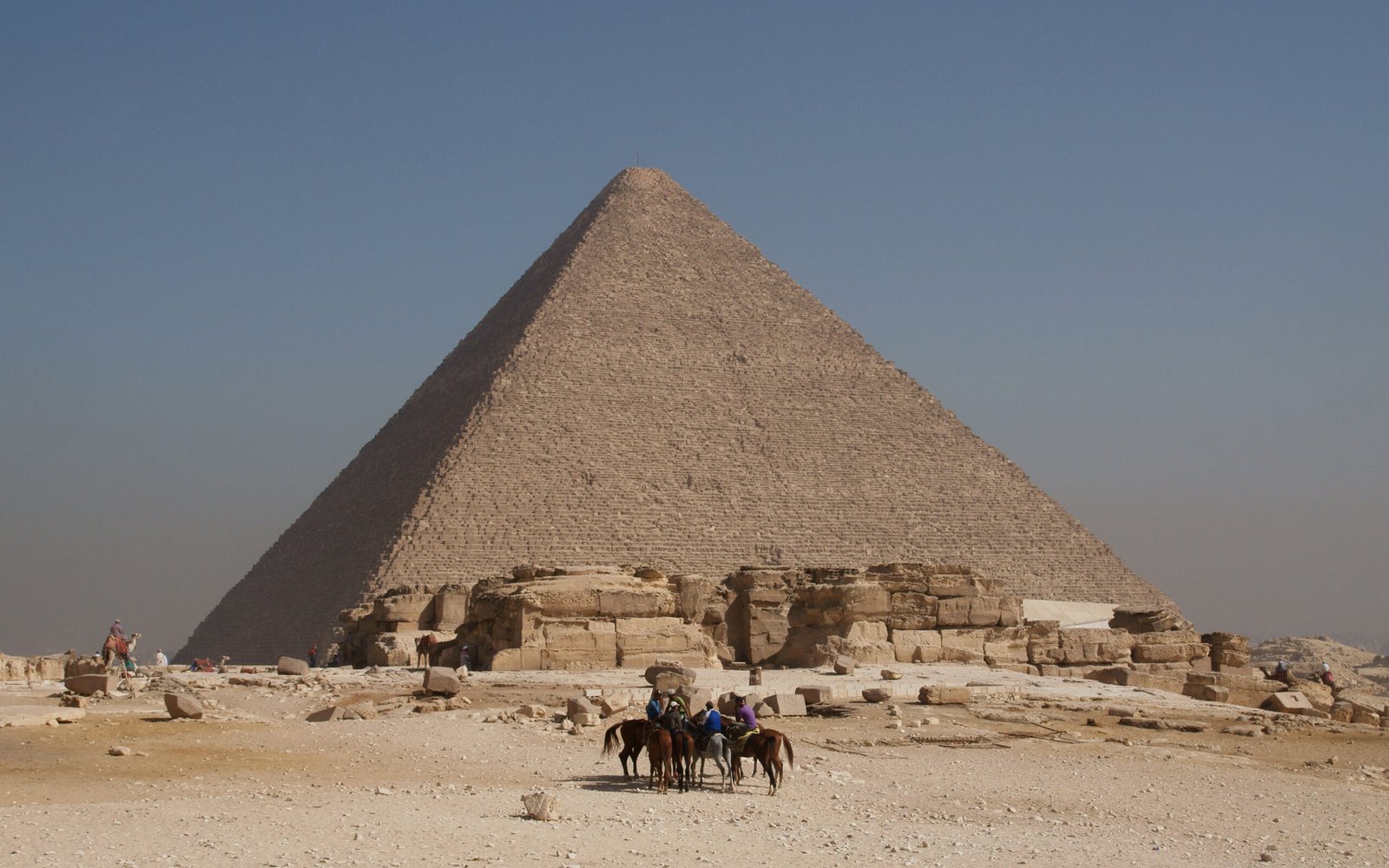
The programme opens in Cairo with focused visits around the Giza Plateau. The Giza Pyramids Complex and the Great Pyramid of Khufu stand alongside the Great Sphinx and the Valley Temple, representing some of the oldest and most iconic constructions of ancient Egypt.
Near Giza, the Grand Egyptian Museum is presented as a vast archaeological repository dedicated to a single civilisation, housing an extensive collection of artefacts that span Egypt’s long history.
The itinerary also includes Old Cairo’s museums and historic landmarks that trace the country’s development from pharaonic to modern times.
Alexandria’s layers of history
A full-day visit to Alexandria brings a different coastal character. The Catacombs of Kom El Shoqafa reveal Roman-era funerary architecture with blended Egyptian and Greek influences.
Pompey’s Pillar and the Qaitbay Citadel mark Alexandria’s imperial and medieval chapters, and the modern Bibliotheca Alexandrina connects the city to its legacy as a centre of learning.
Luxor’s east bank and the Karnak complex
Moving to Upper Egypt, Luxor’s east bank is dominated by monumental temple complexes. Karnak is described as the largest religious complex ever built, an open-air museum of columns, pylons and sanctuaries accumulated over almost two millennia.
Luxor Temple, set within the city, offers another perspective on royal ritual and urban religious life.
River temples and Nilotic heritage
The Nile corridor between Luxor and Aswan features a sequence of riverside temples. Kom Ombo is unique for its symmetrical, double dedication to the crocodile god Sobek and the falcon god Haroeris.
Edfu preserves the Ptolemaic temple of Horus in an unusually intact state, providing a vivid sense of an ancient sanctuary’s layout and decoration.
Aswan’s monuments and stone-working heritage
Aswan highlights include the island temple of Philae, dedicated to Isis and noted for its picturesque setting, and the Unfinished Obelisk in the granite quarries, which offers direct evidence of ancient stone-working techniques.
The Aswan High Dam is also noted among the modern engineering landmarks that have reshaped the Nile and the region.
Abu Simbel and Luxor’s west bank necropolis
The itinerary includes a visit to Abu Simbel, a dramatic rock-cut complex built by Ramses II, famous for its colossal seated statues.
Back in Luxor, the west bank’s funerary landscape contains the Valley of the Kings—the royal burial ground of the New Kingdom—alongside Hatshepsut’s terraced mortuary temple at Deir el-Bahari and the Colossi of Memnon, monumental guardians of the necropolis.
Cairo’s museums, Islamic Cairo and marketplaces
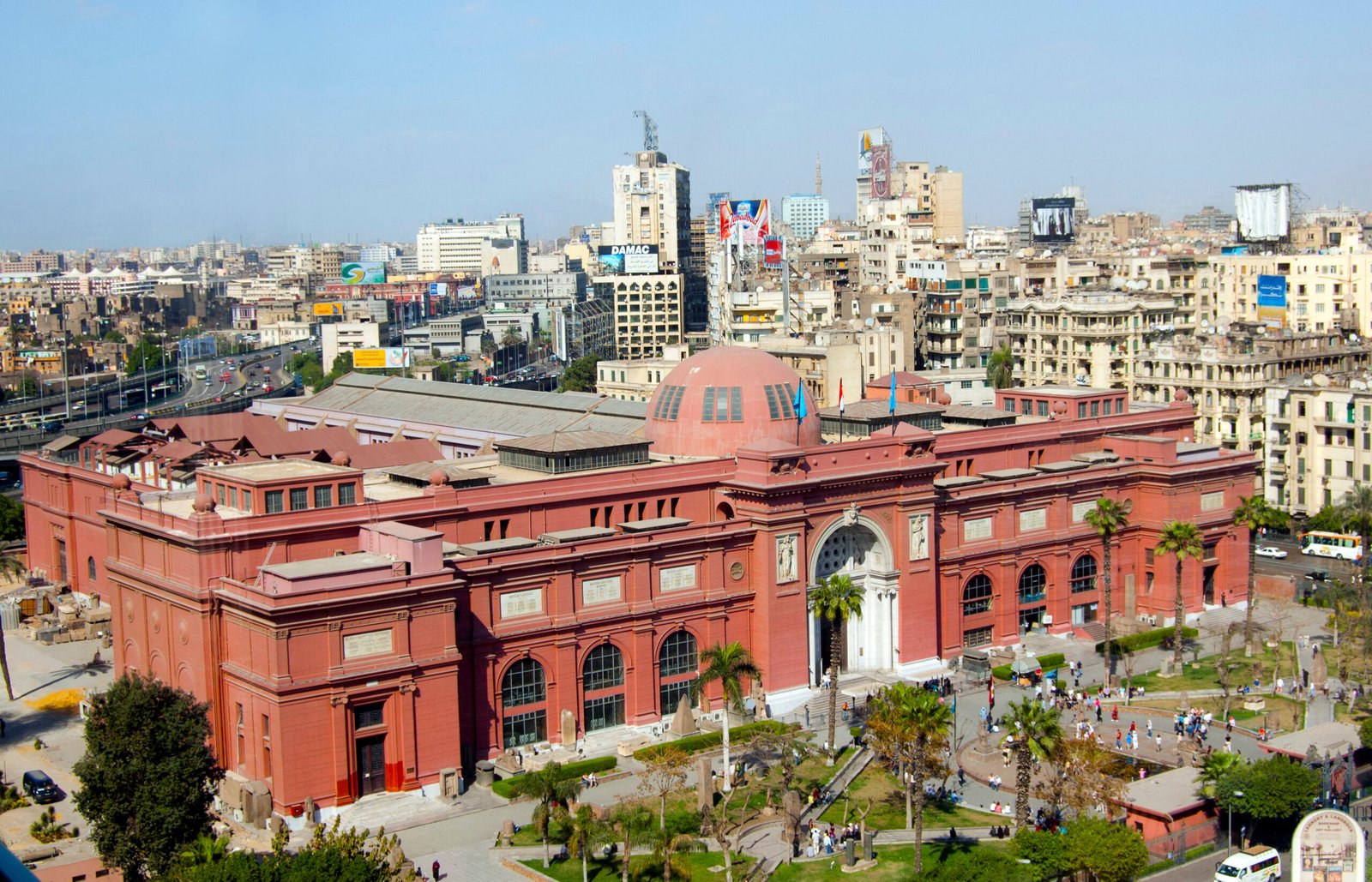
The concluding days return to Cairo’s cultural core. The Egyptian Museum in central Cairo houses a vast assemblage of antiquities spanning millennia.
The National Museum of Egyptian Civilization traces Egyptian history through multiple eras, while Salah El-Din Citadel, the Mohamed Ali Mosque and the dense streets around Al Muizz Street display Cairo’s medieval Islamic heritage.
Khan El Khalili remains the city’s historic bazaar, a lively quarter of crafts and trading tradition.
Across its route, the programme emphasises Egypt’s continuity from pharaonic tombs and temples through Greco-Roman and medieval urban layers to modern national institutions, offering a concentrated survey of the country’s cultural landmarks.
Use this Egypt culture tour overview to understand the pace, destinations and key experiences before you travel.
The Egypt culture tour combines the confirmed stops in one practical route; check the inclusions and exclusions carefully before booking.
The Egypt culture tour Itinerary
Day 1: Day One: Arrival to Egypt + Dinner Cruise
Arrival in Egypt and evening activity as listed: a dinner cruise is scheduled for this day.
Meals: Dinner
Accommodation: 5* hotel in Cairo
Day 2: Day Two: Tour to the Pyramids and Gem
Visit the Giza Pyramids Complex, including the Great Pyramid and the Great Sphinx, and the Valley Temple on the Giza Plateau. The Grand Egyptian Museum is included on this day along with a visit to the Saqqara Step Pyramid.
Meals: Lunch
Accommodation: 5* hotel in Cairo
Day 3: Day Three: Tour to Alexandria Landmarks
Full-day excursion to Alexandria includes the Catacombs of Kom El Shoqafa, Pompey’s Pillar, Qaitbay Citadel and the Bibliotheca Alexandrina.
Meals: Lunch
Accommodation: 5* hotel in Cairo
Day 4: Day Four: Fly to Luxor – Check in the Cruise – Visit Luxor East Bank Highlights
Domestic flight from Cairo to Luxor is included. In Luxor the day covers the Karnak Temple complex and Luxor Temple before boarding the Nile cruise.
Accommodation: 5* Nile Cruise
Day 5: Day Five: Sailing to Kom Ombo
Cruise day with sailing along the Nile en route to Kom Ombo.
Accommodation: 5* Nile Cruise
Day 6: Day Six:Visit Kom Ombo Temple
Visit Kom Ombo Temple, the double temple dedicated to the crocodile god Sobek and the falcon god Haroeris.
Accommodation: 5* Nile Cruise
Day 7: Day Seven: Abu Simbel Tour
Day set aside for the Abu Simbel temples, the rock-cut monuments attributed to Ramses II.
Accommodation: 5* Nile Cruise
Day 8: Day Eight: Tour to Aswan Attractions
Visit Aswan sites listed for this day: the High Dam, the Unfinished Obelisk in the granite quarry and Philae Temple on the island near Aswan.
Accommodation: 5* Nile Cruise
Day 9: Day Nine: Sailing to Edfu
Cruise day with sailing toward Edfu along the Nile.
Accommodation: 5* Nile Cruise
Day 10: Day Ten: Visit Edfu Temple
Visit the temple at Edfu, a well-preserved Ptolemaic sanctuary dedicated to the falcon-headed god Horus.
Accommodation: 5* Nile Cruise
Day 11: Day Eleven: Visit Luxor West Bank Landmarks – Fly to Cairo
On Luxor’s west bank visit the Valley of the Kings, Hatshepsut Temple (Deir el-Bahari) and the Colossi of Memnon. A flight from Luxor to Cairo is included this day.
Meals: Lunch
Accommodation: 5* hotel in Cairo
Day 12: Day Twelve: Visit Cairo Tourist Attractions
Visit Cairo attractions listed for the day: the Egyptian Museum, Salah El-Din Citadel and Mohamed Ali Mosque, the National Museum of Egyptian Civilization, Al Muizz Street and the Khan El Khalili bazaar.
Meals: Lunch
Accommodation: 5* hotel in Cairo
Day 13: Day Thirteen: End Your Experience in Egypt
Program concludes and the arrangement ends on this day.
Before booking this Egypt culture tour, review the confirmed services below and ask for any current operational details that are not stated in the record.
What Is Included
- Five nights in Cairo at a 5-star hotel
- Seven nights aboard a 5-star Nile cruise
- Flight tickets from Cairo to Luxor and return
- Meet and assist service at arrival airports
- A private tour guide for the duration of the trip
- All transfers by private air-conditioned vehicle
- Entrance fees to the sites listed in the itinerary
- Meals as specified on the itinerary
- All taxes and charges
What Is Not Included
- Tipping
- Egypt’s entry visa
- International airfare
- Any items not specifically mentioned in the itinerary or inclusions
Frequently Asked Questions About Egypt culture tour
Review these practical questions about the Egypt culture tour before contacting Gateway Pharaoh.
Are domestic flights included?
Yes. Flight tickets from Cairo to Luxor and the return flight are listed as included.
What accommodation is provided?
The program includes five nights in Cairo at a 5-star hotel and seven nights on a 5-star Nile cruise.
Are entrance fees covered?
Yes. Entrance fees to all sites listed in the itinerary are included.
Is tipping included?
No. Tipping is listed as excluded and is not covered in the price.
Is Egypt’s entry visa included?
No. Egypt’s entry visa is listed as excluded.
Are international flights included?
No. International airfare to and from Egypt is not included.
Will I have a guide and transfers?
Yes. A private tour guide is included for the whole tour, and all transfers are by private air-conditioned vehicle.
Are meals included?
Meals are included only as indicated in the daily itinerary; additional meals are not specified.
Is airport assistance provided?
Yes. Meet and assist service at the airport is included.
When you are ready to plan this Egypt culture tour, contact Gateway Pharaoh for the current operational details shown in the booking record.
Explore more Egypt travel ideas on Gateway Pharaoh and our Cairo travel guides and Nile travel guides.
For general information about Egypt’s cultural heritage, consult the UNESCO World Heritage information for Egypt.
Overview
Explore Egypt’s major archaeological and cultural sites
This thirteen-day itinerary brings together many of Egypt’s most celebrated monuments, museums and urban quarters across Cairo, Alexandria, Luxor and Aswan. Over nearly two weeks you move between the Nile’s east and west banks, visit coastal Alexandria and travel along the river corridor where temples and tombs punctuate the landscape.
Beginnings in Cairo and the Giza Plateau
The programme opens in Cairo with focused visits around the Giza Plateau. The Giza Pyramids Complex and the Great Pyramid of Khufu stand alongside the Great Sphinx and the Valley Temple, representing some of the oldest and most iconic constructions of ancient Egypt.
Near Giza, the Grand Egyptian Museum is presented as a vast archaeological repository dedicated to a single civilisation, housing an extensive collection of artefacts that span Egypt’s long history. The itinerary also includes Old Cairo’s museums and historic landmarks that trace the country’s development from pharaonic to modern times.
Alexandria’s layers of history
A full-day visit to Alexandria brings a different coastal character. The Catacombs of Kom El Shoqafa reveal Roman-era funerary architecture with blended Egyptian and Greek influences. Pompey’s Pillar and the Qaitbay Citadel mark Alexandria’s imperial and medieval chapters, and the modern Bibliotheca Alexandrina connects the city to its legacy as a centre of learning.
Luxor’s east bank and the Karnak complex
Moving to Upper Egypt, Luxor’s east bank is dominated by monumental temple complexes. Karnak is described as the largest religious complex ever built, an open-air museum of columns, pylons and sanctuaries accumulated over almost two millennia. Luxor Temple, set within the city, offers another perspective on royal ritual and urban religious life.
River temples and Nilotic heritage
The Nile corridor between Luxor and Aswan features a sequence of riverside temples. Kom Ombo is unique for its symmetrical, double dedication to the crocodile god Sobek and the falcon god Haroeris. Edfu preserves the Ptolemaic temple of Horus in an unusually intact state, providing a vivid sense of an ancient sanctuary’s layout and decoration.
Aswan’s monuments and stone-working heritage
Aswan highlights include the island temple of Philae, dedicated to Isis and noted for its picturesque setting, and the Unfinished Obelisk in the granite quarries, which offers direct evidence of ancient stone-working techniques. The Aswan High Dam is also noted among the modern engineering landmarks that have reshaped the Nile and the region.
Abu Simbel and Luxor’s west bank necropolis
The itinerary includes a visit to Abu Simbel, a dramatic rock-cut complex built by Ramses II, famous for its colossal seated statues. Back in Luxor, the west bank’s funerary landscape contains the Valley of the Kings—the royal burial ground of the New Kingdom—alongside Hatshepsut’s terraced mortuary temple at Deir el-Bahari and the Colossi of Memnon, monumental guardians of the necropolis.
Cairo’s museums, Islamic Cairo and marketplaces
The concluding days return to Cairo’s cultural core. The Egyptian Museum in central Cairo houses a vast assemblage of antiquities spanning millennia. The National Museum of Egyptian Civilization traces Egyptian history through multiple eras, while Salah El-Din Citadel, the Mohamed Ali Mosque and the dense streets around Al Muizz Street display Cairo’s medieval Islamic heritage. Khan El Khalili remains the city’s historic bazaar, a lively quarter of crafts and trading tradition.
Across its route, the programme emphasises Egypt’s continuity from pharaonic tombs and temples through Greco-Roman and medieval urban layers to modern national institutions, offering a concentrated survey of the country’s cultural landmarks.
Trip Highlights
- Visit the Giza Pyramids Complex, including the Great Pyramid, Great Sphinx and the Valley Temple
- Explore the Grand Egyptian Museum and the National Museum of Egyptian Civilization in Cairo
- Seven-night Nile cruise with scheduled stops at Luxor, Kom Ombo, Edfu and Aswan
- Tour Abu Simbel and see the colossal rock-cut temples attributed to Ramses II
- Discover Luxor’s Karnak Temple and Luxor Temple on the Nile’s east bank
- See Aswan’s High Dam, the Unfinished Obelisk and Philae Temple on the island
- Day trip to Alexandria to visit the Catacombs of Kom El Shoqafa, Pompey’s Pillar and Qaitbay Citadel